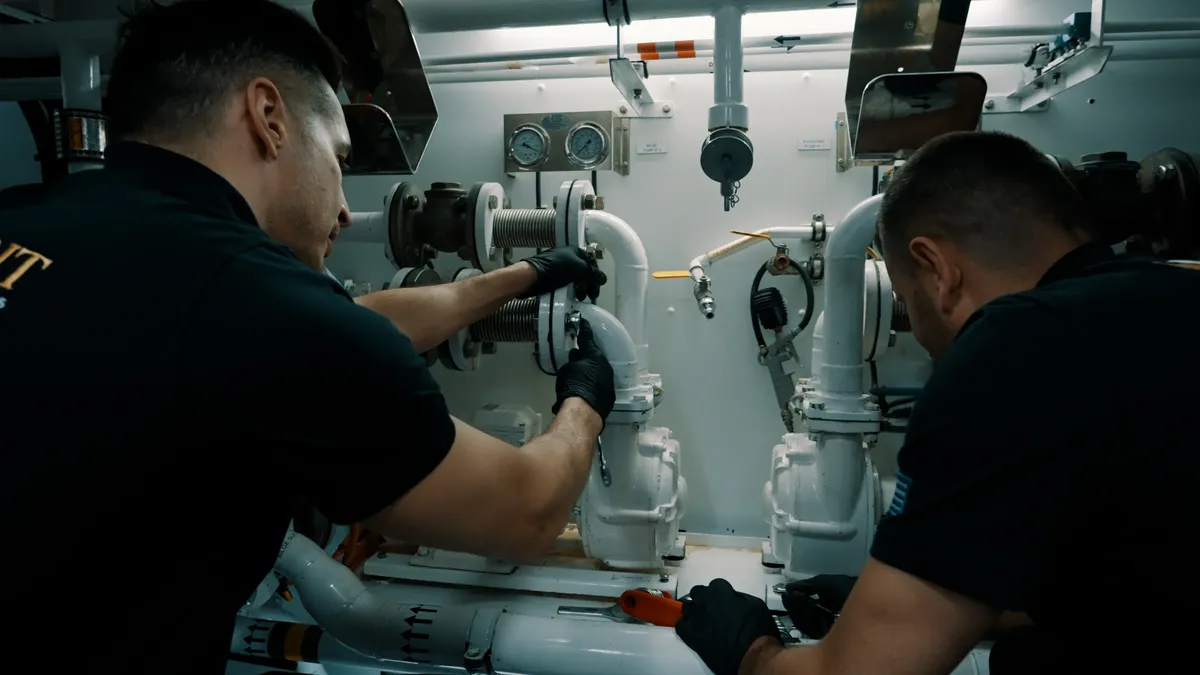
How to choose a watermaker for your boat
Litres per hour, electrical power, space, maintenance and comparing quotes: a buyer's guide to boat watermakers, with a worked example and a model table.
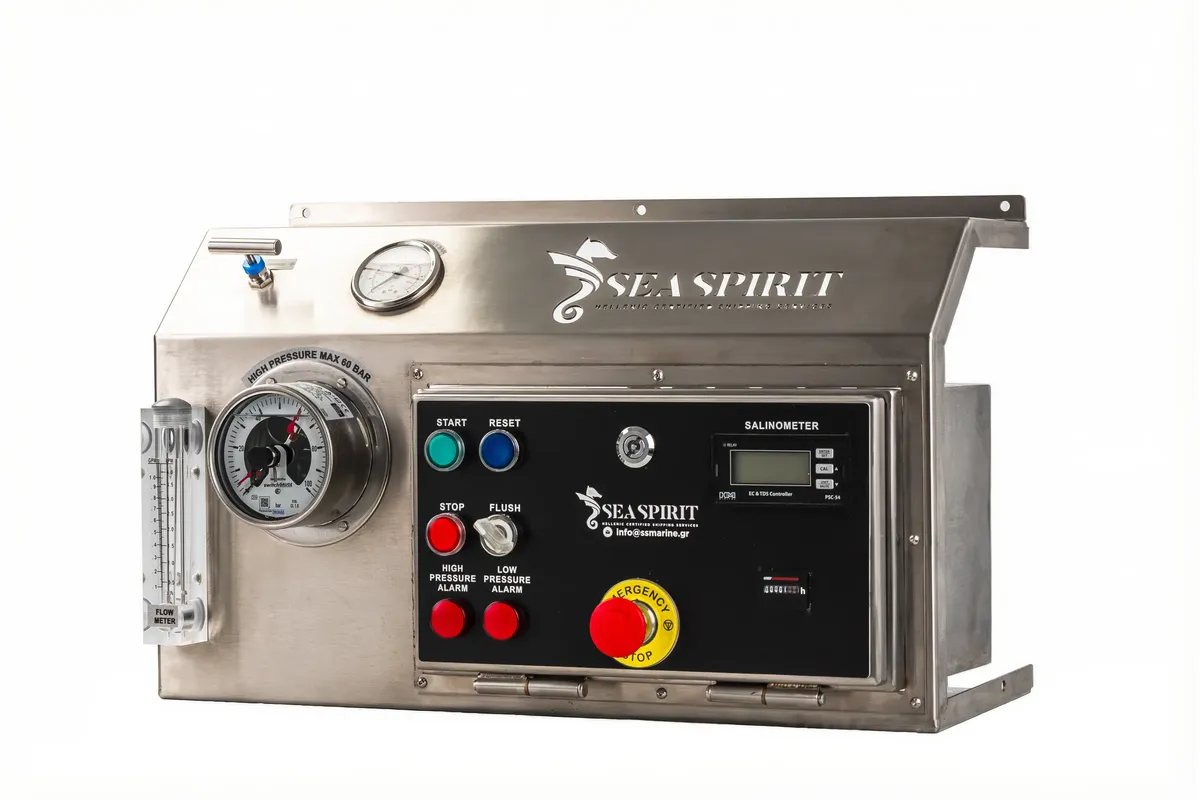
Start from the water you need, not from the model
The most common question is "which watermaker is best?". The right question is "how much water does my boat need, and how many hours a day do I want the unit to run?". A watermaker does not produce water continuously: it runs for a few hours, fills the tank and stops. So its size comes from a simple division.
Worked example
Take a boat with 4 people and, as an illustration, 60 litres per person per day (the figure is an assumption for the example; real needs depend on the crew's habits, showers, washing machine and cooking). The daily need is 4 x 60 = 240 litres. Running hours per model are:
- 70 L/h unit: about 3.4 hours a day
- 140 L/h unit: about 1.7 hours
- 180 L/h unit: about 1.3 hours
- 280 L/h unit: about 0.9 hours
If the boat has more people, a larger crew, or daily use of a washing machine and showers, size up. If it is mostly used for short trips, a smaller unit is enough.
Output: what 70, 140, 180 and 280 L/h mean
Output comes from the number and size of the membranes. In the AquaSpirit range, according to the model pages:
| Version | Output | Membranes | Power (230 V AC, 50 Hz) | Weight |
|---|---|---|---|---|
| 7.0 | 70 L/h | 1 x SW30-2540 | 1.9 kW | 67 kg |
| 14.0 | 140 L/h | 2 x SW30-2540 | 1.9 kW | 73 kg |
| 22.0 | 180 L/h | 1 x SW30-4040 | 2.6 kW | 78 kg |
| 28.0 | 280 L/h | 4 x SW30-2540 | 2.6 kW | 85 kg |
The figures are for the Premium series; on Pro the 28.0 version lists 2.2 kW. Membrane names follow the usual size coding: 2540 means 2.5 inches in diameter and 40 inches long, 4040 means 4 inches in diameter and the same length.
Note that installed power does not scale linearly with output: the 140 L/h unit has the same power as the 70 L/h one. If your electrical capacity is tight, this changes the comparison. Remember, though, that this is installed power and not measured consumption.
Electrical power: the hidden limit
AquaSpirit units run on 230 V AC. Before any purchase, answer three questions:
- Where will the power come from when the watermaker runs: a generator, shore power, or an inverter with batteries?
- Can that source handle 1.9 to 2.6 kW of extra load together with whatever else runs at the time (air conditioning, water heater, refrigerators)?
- How many hours a day are you willing to run the generator or draw on the batteries for water?
If the answer to the second question is no, the fix is usually not a smaller watermaker but better scheduling: run it when the generator is already on or when the boat is on shore power.
Space and type: single unit or split
The dimensions (length x width x height, in cm) stated on the model pages show how the series differ in installation:
- AquaSpirit Premium: 55 x 49 x 35
- AquaSpirit Pro: 55 x 49 x 32
- AquaSpirit Splitline: 55 x 22 x 36 (head and membrane separate)
- AquaSpirit Splitline S: 55 x 22 x 38 (compact split for smaller boats)
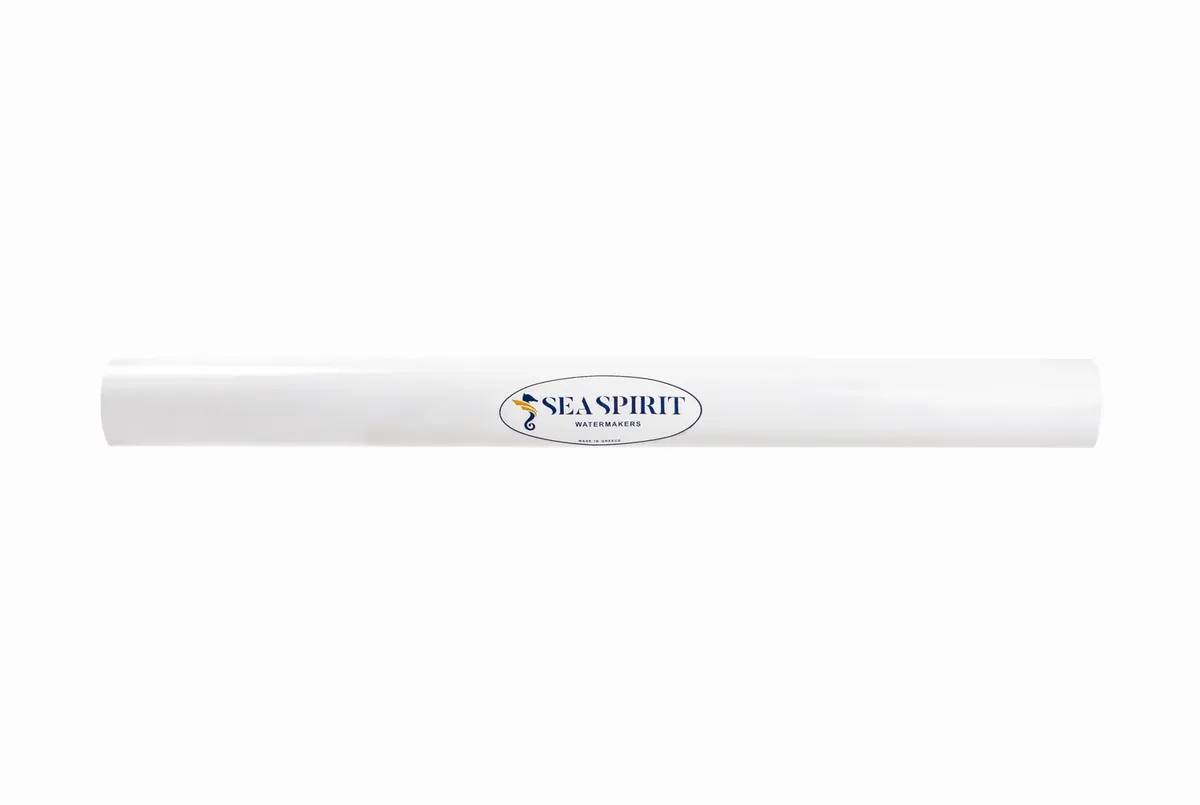
The membrane housing is a separate, long component (length x diameter, for example 130 x 10 cm for the 7.0 version and 130 x 56 cm for the 28.0, as stated on the model pages). The flexibility of the split design is that housing and head can be placed in different spots, which helps on boats without one large free space.
Service access and easy maintenance
A watermaker you cannot reach is a watermaker that does not get maintained. Before choosing a model and a location, check that you can reach the filters, the panel gauges and the membrane housing. The AquaSpirit range is designed, as Sea Spirit states, for quick access and service; the actual installation is what makes that true on your boat.
Installation and support matter as much as the model
The best unit loses out if it is installed badly. Ask whoever proposes a watermaker:
- Will they survey the boat before quoting, and plan the space, the through-hull and the electrics?
- Who does the installation and setup, and how is the result checked (pressures, salinity)?
- Where is the service? Can they come to the boat, and with which spare parts?
- What must you do each season: flushing, filters, preservation?
- If you already own a unit, can it be upgraded or optimised instead of replaced?
Through its desalination service, Sea Spirit covers all these stages: study and design, installation and setup, maintenance and support, and upgrades of existing units. For the technology basics, see the guide boat desalination: how it works.
How to compare quotes
Two quotes for a "140 litre watermaker" may not include the same things. Before comparing prices, write side by side what each one includes:
- the same output in L/h and the same number and type of membranes;
- installation (through-hull, piping, electrics) and setup at first start;
- consumables (filters, flushing and preservation fluids) and when they will be needed;
- the ability and response time for service in case of a fault.
The lowest purchase price is not always the most economical choice. A unit that works properly, that you can reach to maintain, and that has someone to support it costs less over time than one that sits out of action in the middle of the season.
Checklist before you decide
- I have calculated the daily water need and running hours.
- I know which power source will feed the unit and whether it can take the load.
- I have measured the available space and know whether I need a single or split unit.
- There is a place for a dedicated through-hull.
- I have secured access for service and filter changes.
- I have a clear plan for installation, setup and future maintenance with a specific workshop.
Frequently asked questions about choosing a watermaker
How many litres per hour do I need?
Divide your daily need in litres by the hours you want the unit to run. For example, 240 litres a day in about 2 hours means a unit of around 120 L/h, so the 140 L/h version covers the need with some margin.
Which AquaSpirit model should I choose?
Premium and Pro are single units with a control panel, Splitline separates head and membrane for installation flexibility, and Splitline S is the compact version for smaller boats. The right model comes from your space, output and available power.
Can a watermaker run on a generator?
Yes, as long as the generator or inverter can handle the unit's stated power (1.9 to 2.6 kW on AquaSpirit models) together with the other loads.
Is maintenance difficult?
The basic care is regular flushing with chlorine-free fresh water, timely filter changes and proper preservation when the boat sits idle. Specialised maintenance is left to a technician.
How much does a boat watermaker cost?
The price depends on output, model and the installation on your particular boat. Sea Spirit gives a quote after contact and a study of your needs.
Looking for a watermaker for your boat?
The Sea Spirit team surveys your boat and recommends the right AquaSpirit unit, with installation and support.