Boat desalination: how a watermaker works
How does seawater become fresh water on board? A complete guide to reverse osmosis desalination: components, installation, maintenance and common mistakes.
What desalination on a boat means
Desalination turns seawater into fresh water. On land we know it from the large plants serving islands. At sea it is done by a small, specialised piece of equipment called a desalinator or, in boating terms, a watermaker. Its purpose is simple: fresh water for washing, cooking and, under the right conditions, drinking, without depending on the marina.
That independence has practical value. On the islands fresh water is not always plentiful or cheap, cruising with anchorages far from ports is increasingly common, and a water tank empties faster than most people expect once showers, a washing machine and guests are on board.
How reverse osmosis works, step by step
Almost all modern boat watermakers use reverse osmosis. Seawater contains roughly 35 grams of salt per litre (a little more in the Mediterranean). When it is pressed hard against a special semi-permeable membrane, water molecules pass through while almost all the salt is held back. The water's path through the unit is as follows:
- Intake. A feed pump draws seawater from its own through-hull fitting (ideally dedicated to the watermaker) and sends it to the unit.
- Pre-filtration. Filters catch sand, algae and suspended particles. 5 micron filters are common. Whatever is not stopped here will clog the membrane later.
- High-pressure pump. It raises the water pressure to many tens of bar (typically around 55 to 65 bar for seawater). This is where most of the energy is used.
- Membrane. Inside a cylindrical housing, the membrane lets fresh water (the permeate) through. The remaining, saltier water (the brine) returns to the sea through a separate outlet.
- Quality check and storage. A salinity meter shows whether the product water is at an acceptable level. If it is not, the water should not be sent to the tank.
In practice only a part of each litre of seawater entering the unit becomes fresh water (small boat systems normally work at a low recovery rate), which is why the feed pump and the brine outlet are sized for a much larger flow than the one filling your tank.
The main parts of a watermaker
- Seawater intake and valve with plumbing suited to seawater.
- Feed pump and pre-filters that protect everything downstream.
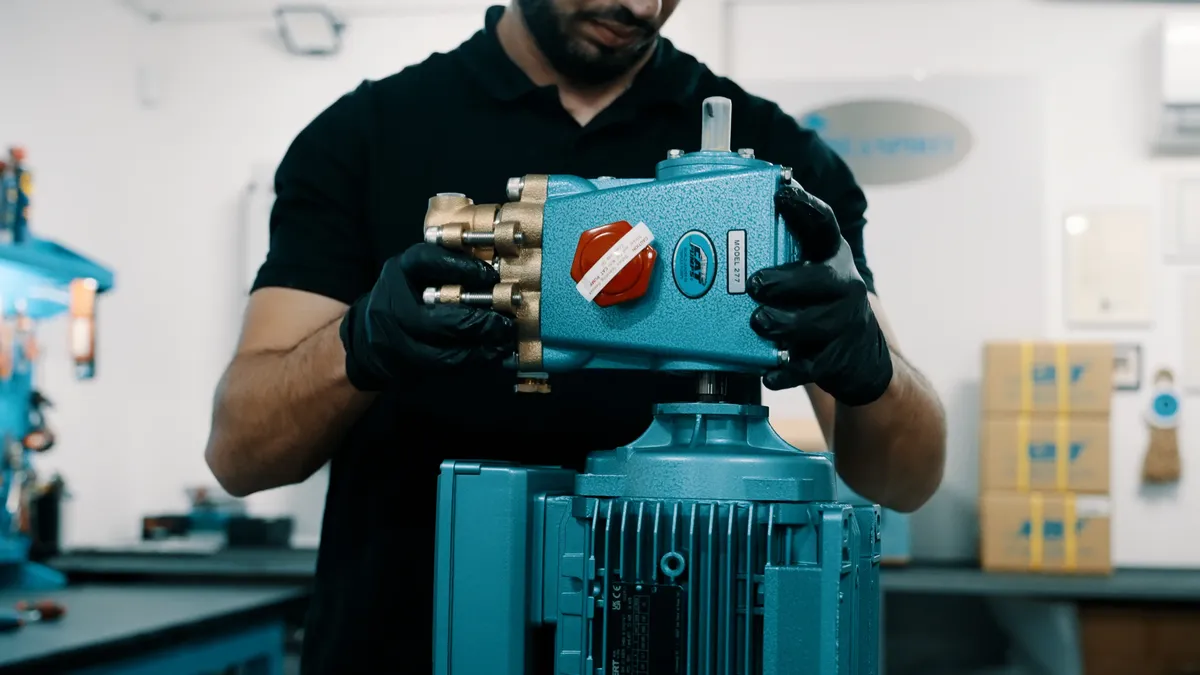
- High-pressure pump with an electric motor. This is the heart of the unit.
- Membrane housing(s) with membranes, which set how much water can be produced per hour.
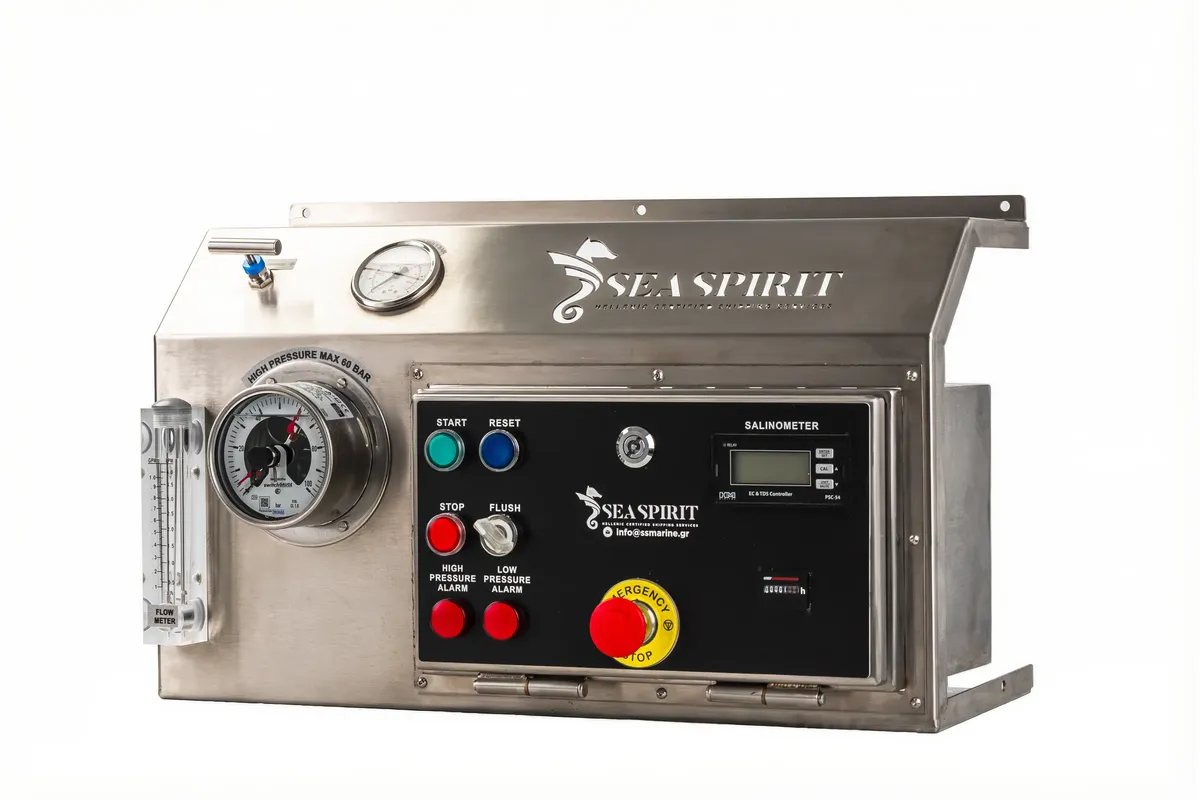
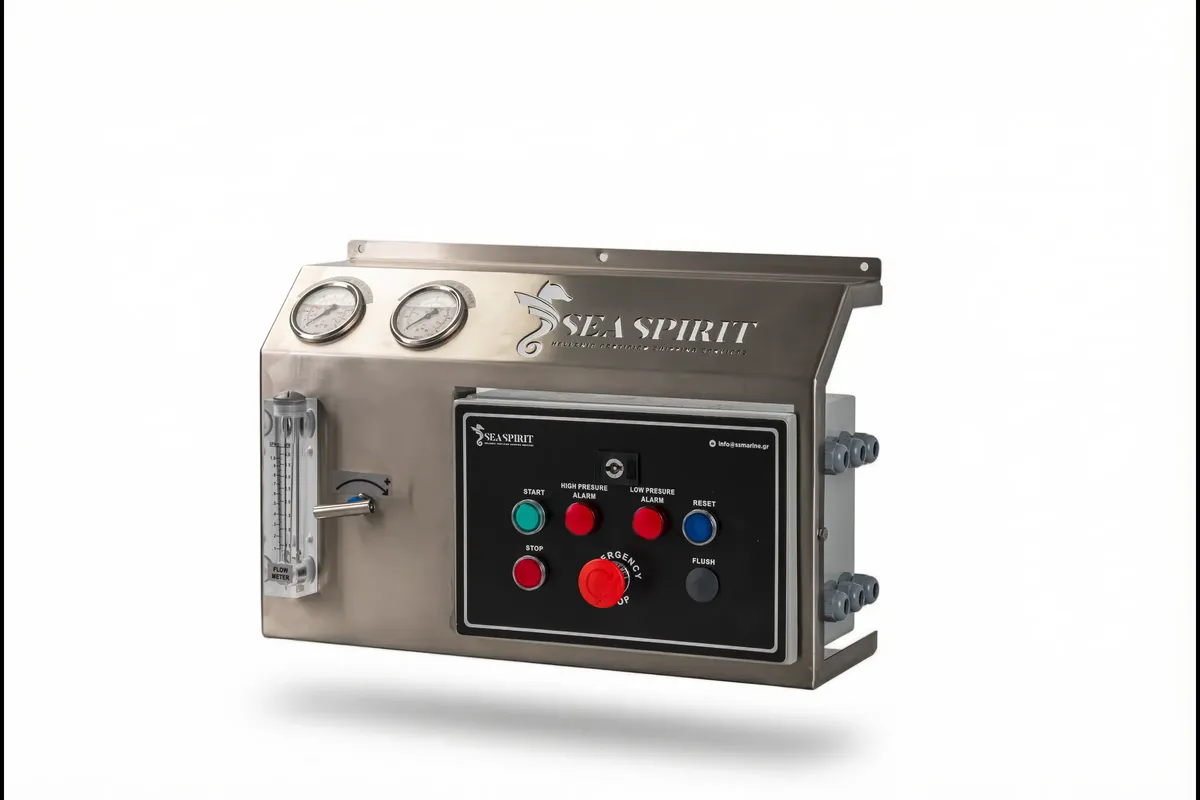
- Control panel with pressure gauges, a salinity reading, start and stop buttons and pressure alarms.
- Fresh water flush system, so the membrane does not sit in salt water when idle.
How much water it makes and how much power it needs
Output is measured in litres per hour (L/h) and is mainly set by the number and size of the membranes. In Sea Spirit's AquaSpirit range the available outputs are 70, 140, 180 and 280 litres per hour, at 230 V AC 50 Hz, with an installed power of 1.9 kW for the smaller versions and 2.6 kW for the larger ones, as stated on the model pages.
One useful takeaway: power does not double when output doubles. The 140 L/h unit lists the same installed power (1.9 kW) as the 70 L/h one, so it needs less energy per litre. Note that this is installed power and not measured consumption, and in every case the electricity has to exist on board, whether from a generator, shore power, or an inverter with batteries of suitable capacity.
Where and how it is installed
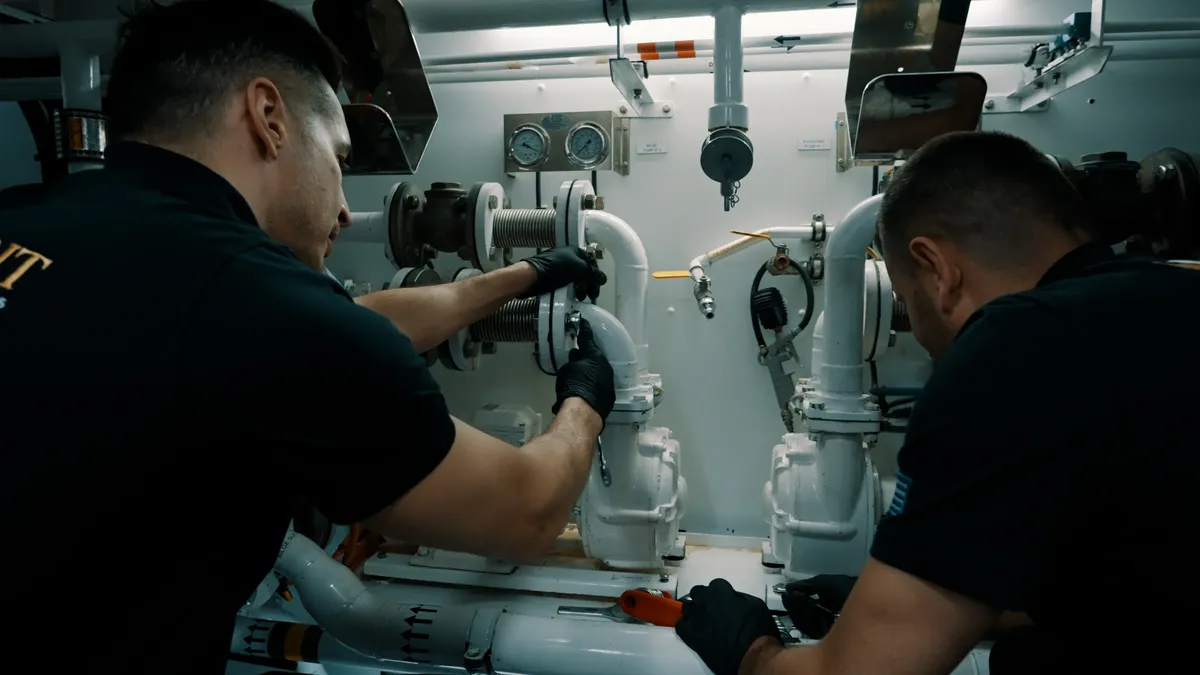
The installation largely decides how many years the watermaker will work properly. The basics:
- Space and ventilation. The unit needs a dry, well-ventilated spot with service access. Dimensions and weights of the AquaSpirit models are listed on their pages so you can check the fit before ordering.
- A dedicated through-hull. The cleaner and steadier the water going in, the better for the membrane. The intake is placed so it does not draw air when the boat heels.
- Correct brine and product water outlets with suitable piping and no restrictions.
- Electrical installation by a qualified person, with proper cabling and protection.
- Setup and first start with pressure and salinity checks. A unit that was not set up properly produces less and wears faster.
For smaller boats or tight engine rooms, AquaSpirit Splitline and the compact Splitline S use a split design (head and membrane separate), which helps when there is no single large space available.
Maintenance: what keeps a watermaker healthy
Membranes are the most expensive and sensitive link. Three things protect them:
- Fresh water flush. After each use, or as the manufacturer specifies, the unit is flushed so no salt water is left and no organisms grow. This water must be chlorine-free, because chlorine damages reverse osmosis membranes.
- Timely filter changes. Clogged pre-filters strain the pump and reduce output.
- Preservation during long idle periods. If the boat sits for months, the watermaker needs a preservative solution rather than simple waiting. The procedure is set by the manufacturer.
Also, do not run the watermaker in a marina with cloudy or oily water, near sewage outlets, or where fuel has just been delivered. That is the worst water you can feed a membrane.
Common mistakes
- Choosing a unit on price alone, without calculating water needs and available electrical power.
- Sharing a through-hull with other systems, which brings air or dirt into the unit.
- Skipping the flush and maintenance after each period of use.
- Flushing with chlorinated water.
- Installing without access for filter changes and reading the gauges.
The AquaSpirit range from Sea Spirit
Sea Spirit provides technical services for boats in Athens, with over 10 years of experience. It handles design, installation, maintenance and upgrades of existing desalination units, and offers the AquaSpirit range in four models: Premium, Pro, Splitline and Splitline S, with outputs from 70 to 280 L/h. You can read more about the service on the desalination units page. To compare models, see also the guide how to choose a watermaker for your boat.
Frequently asked questions about boat desalination
Is the water from a watermaker drinkable?
A healthy watermaker produces water with far less salt than seawater. For drinking, follow the manufacturer's instructions, watch the salinity reading, and keep the boat's plumbing and tank clean. If anything looks wrong, do not use the water for drinking.
How much water does a boat need per day?
It depends on the people on board and their habits. See the worked example in the watermaker buying guide and use your own numbers.
Does a watermaker need to run all the time?
No. It usually runs a few hours a day to fill the tank. The hours come from your daily need and the unit's output in L/h.
Can I fit a watermaker to a boat I already own?
Usually yes, provided there is space, a possible through-hull position and enough electrical power. That is judged with a visit and survey on the boat.
How is boat desalination different from the big plants on land?
The principle is the same (reverse osmosis), but boat units are small, built for the marine environment and designed for irregular use and limited space.
Looking for a watermaker for your boat?
The Sea Spirit team surveys your boat and recommends the right AquaSpirit unit, with installation and support.